
Standing on the edge of a high-alpine basin in the Sierra Nevada or looking down at a murky cow pond in the high desert of New Mexico, every long-distance hiker faces the same fundamental challenge: the necessity of hydration versus the crushing weight of water. Water is the heaviest item in a backpack, weighing approximately 2.2 pounds per liter. For a hiker crossing a thirty-mile dry stretch on the Continental Divide Trail, carrying six or seven liters of water can add nearly fifteen pounds to their base weight. This is why mastering ultralight water filtration is not just a matter of convenience; it is a critical skill for safety, efficiency, and physical longevity on the trail. As we move into 2026, the technology behind backcountry water treatment has evolved to prioritize faster flow rates, lighter materials, and more robust protection against emerging environmental contaminants.
Choosing the right system involves balancing weight, speed, and the specific biological threats present in the water sources of your chosen route. Whether you are navigating the humid, rain-soaked Appalachian Trail or the arid stretches of the Pacific Crest Trail, your ultralight water filtration setup must be reliable enough to prevent debilitating illnesses like Giardia or Cryptosporidium while being light enough to vanish into your pack weight. This guide provides a comprehensive roadmap for 2026, covering mechanical filtration, chemical treatments, and the logistical strategies used by elite thru-hikers to stay hydrated without being weighed down. We will explore the trade-offs of various systems, maintenance protocols to ensure your gear lasts for thousands of miles, and the specific requirements of the major National Scenic Trails in the United States.
Why Water Weight is a Major Factor in Ultralight Backpacking
In the world of ultralight backpacking, every ounce is scrutinized. However, water weight is dynamic. Unlike your tent or sleeping bag, which remain constant, your water weight fluctuates throughout the day. The goal of an efficient ultralight water filtration strategy is to minimize the amount of water you carry at any given time by maximizing the efficiency of your collection and treatment process. By using a high-flow system, a hiker can stop at a stream, drink their fill, and filter a small amount for the next few miles, rather than carrying several liters “just in case.”
The 2026 trend in lightweight water filter hiking focuses on “camel-ing up” at sources. This technique involves drinking a significant amount of water directly at the source after it has been treated, reducing the physical load on the spine and knees during the subsequent miles of hiking. To do this effectively, the treatment method must be nearly instantaneous. Slow filters or chemical treatments with long wait times often discourage hikers from staying properly hydrated, leading to fatigue and heat-related illnesses. Therefore, the weight of the filter itself is only one part of the equation; the time-cost of using the system is equally important for maintaining a steady pace on long-distance trails.
[Image Suggestion: A close-up of a transparent water bottle being filled from a clear mountain stream, showing a compact filter attached to the top. Alt-text: ultralight water filtration setup on trail 2026]
Core Principles of Ultralight Water Filtration & Treatment
Effective backcountry water treatment in 2026 rests on three pillars: exclusion, neutralization, and logistics. Exclusion refers to physical barriers, such as hollow fiber membranes, that strain out pathogens. Neutralization involves chemical or UV methods that deactivate the DNA of bacteria and viruses, rendering them harmless. Logistics involves the hardware used to move water from the source to your mouth, including bags, hoses, and bottles.
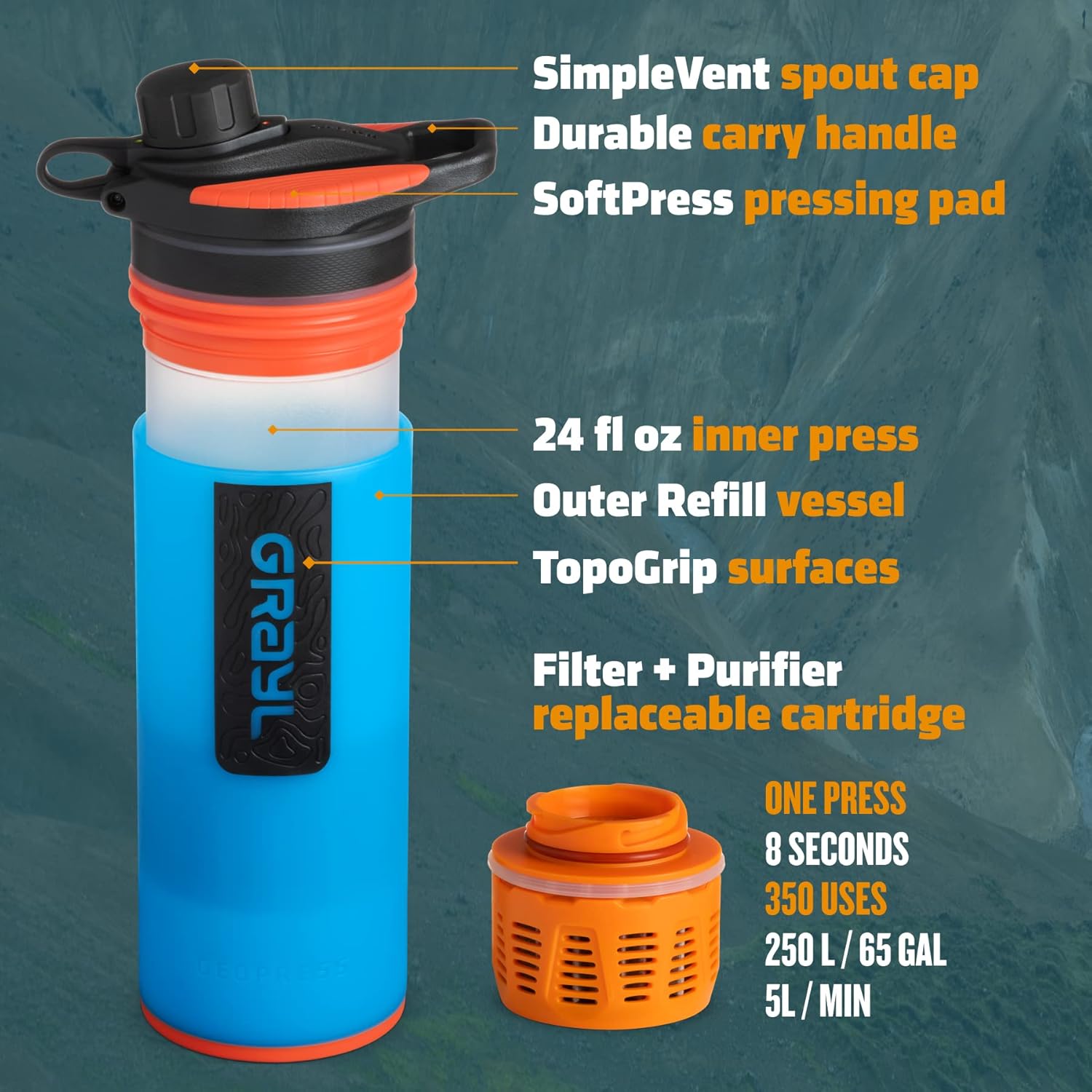
When designing an ultralight hydration setup, simplicity is paramount. The more moving parts a system has, the more likely it is to fail in the wilderness. Many modern thru-hikers have moved away from heavy pump-style filters in favor of squeeze or gravity-based systems. These systems leverage the pressure of your hands or gravity itself to force water through a filter, eliminating the need for heavy mechanical pumps and fragile internal valves. Furthermore, the integration of ultralight water purification into the storage vessel itself—such as a filter that threads directly onto a standard narrow-mouth bottle—has become the gold standard for efficiency.
Mechanical Filters: Types, Flow Rate, and Weight
Mechanical filters are the most popular choice for hikers in the USA. Most modern ultralight water filtration units utilize hollow fiber membrane technology. These membranes consist of thousands of tiny tubes with microscopic pores (typically 0.1 microns in size). As water passes through these tubes, bacteria and protozoa are trapped on the outside, while clean water flows through the center.
The primary advantage of these filters is the immediate result. There is no waiting for a chemical reaction to occur. However, flow rate is a critical metric. A filter that starts with a flow rate of one liter per minute may quickly degrade to half that speed if the water is silty or turbid. In 2026, we see a rise in sawyer squeeze alternatives that offer larger surface areas within the filter housing to maintain high flow rates even in less-than-ideal conditions. Weighing between 1.5 and 3.5 ounces, these filters represent the pinnacle of weight-to-performance ratios.
Comparison of Mechanical Filtration Methods
| Filter Type | Average Weight | Flow Rate (L/min) | Primary Benefit |
|---|---|---|---|
| Hollow Fiber Squeeze | 2.0 – 3.0 oz | 1.0 – 1.5 | Instant, lightweight, versatile |
| Hollow Fiber Straw | 1.0 – 2.0 oz | 0.5 – 0.8 | Minimalist, emergency use |
| In-line Gravity | 3.0 – 5.0 oz | 1.5 – 2.0 | Hands-free, great for groups |
Chemical and UV Treatment Options
While mechanical filters are excellent for removing bacteria and protozoa, they often do not protect against viruses, which are much smaller. In most wilderness areas in the United States, viruses are not a primary concern because they typically require a human host to spread. However, in high-traffic areas or international trekking, chemical water treatment or UV light becomes necessary. Chlorine dioxide drops or tablets are the most common chemical choice for 2026. They are extremely light (less than 1 ounce for a multi-day supply) and effective against all major pathogens, including viruses.
The downside to chemical treatment is the wait time, which can range from 30 minutes to 4 hours depending on the temperature and the target pathogen (Cryptosporidium takes the longest to neutralize). UV purification pens offer a faster alternative, using ultraviolet light to scramble the DNA of microbes in about 90 seconds. While highly effective, UV systems require batteries and a clear water source to function properly, making them a less common choice for ultralight water purification among the most minimalist thru-hikers who prefer to avoid electronic dependency.
[Image Suggestion: A hiker adding clear drops to a water bottle with a mountain range in the background. Alt-text: chemical water treatment for ultralight backpacking 2026]
Gravity and Inline Systems
For those who find the physical effort of squeezing a filter tiring, a gravity filter ultralight setup is an excellent alternative. This system involves a “dirty” bag filled with source water, hung from a tree or held aloft, with a hose connecting it to the filter and a “clean” vessel below. Gravity does the work, allowing the hiker to perform other tasks like setting up camp or stretching while their water is treated. This is particularly popular on the Appalachian Trail, where water sources are frequent and camp-side filtration is common.
Inline systems take this a step further by integrating the filter directly into the hose of a hydration bladder. As the hiker drinks, the suction pulls water through the filter. While convenient, these systems can be difficult to monitor, as it is hard to tell how much water remains in the bladder, and they can be more challenging to clean and maintain in the field. In 2026, the trend has shifted toward modular systems that can function as a squeeze, a gravity, or an inline filter depending on the day’s needs.
Storage and Carrying Methods: The Ultralight Water Bottle System
The ultralight water bottle system has largely replaced the heavy, clunky plastic bottles of the past. Most thru-hikers now use 1-liter narrow-mouth recycled plastic bottles (originally used for carbonated beverages or water). These bottles are incredibly durable, weigh only an ounce, and are compatible with the threading of most popular ultralight water filtration units. This compatibility allows the filter to be screwed directly onto the bottle, creating a seamless drinking experience.
In addition to rigid bottles, flexible TPU (thermoplastic polyurethane) flasks and bags are used for extra capacity. These can be rolled up when empty, saving space in the pack. A common setup in 2026 involves two 1-liter rigid bottles in the side pockets of the pack for easy access, and one 2-liter collapsible bag stored inside the pack for long water carries. This modularity ensures that the hiker is never carrying more weight than necessary for the current section of trail.
Treatment Method Pros and Cons
| Method | Pros | Cons |
|---|---|---|
| Mechanical Filter | Instant, removes sediment, no taste | Can freeze/break, requires cleaning |
| Chlorine Dioxide | Lightest weight, kills viruses | Wait time, slight chemical taste |
| UV Light | Fast, no chemicals, kills viruses | Requires batteries, clear water only |
| Boiling | 100% effective, no gear needed | Uses fuel, time-consuming, hot water |
Risks of Skipping Treatment: The Reality of No Filter Hiking
The no filter hiking risks are often underestimated by those who believe that high-altitude or fast-moving water is inherently safe. Even the most pristine-looking stream can be contaminated by animal waste or human runoff further upstream. Pathogens like Giardia lamblia can survive for weeks in cold water. Contracting a waterborne illness on a trail like the PCT or CDT is not just an inconvenience; it can lead to severe dehydration, weight loss, and the end of a multi-month journey.
In 2026, environmental changes and increased trail usage have made backcountry water treatment more important than ever. High-traffic corridors often see “stealth” contamination from hikers who do not follow Leave No Trace principles regarding human waste. While some experienced hikers claim to never filter, the statistical risk of infection increases with every untreated liter consumed. The weight penalty of a 2-ounce filter is a small price to pay for the insurance it provides against a trip-ending illness.
[Image Suggestion: A diagram showing a microscopic view of pathogens vs the pores of a hollow fiber filter. Alt-text: how ultralight water filtration protects against pathogens]
Maintenance and Longevity of Lightweight Water Filter Hiking Gear
To ensure your lightweight water filter hiking equipment lasts an entire 2,000-mile thru-hike, regular maintenance is mandatory. Mechanical filters are susceptible to “clogging,” where minerals and organic matter build up in the fibers. Backflushing—the process of forcing clean water backward through the filter—is the primary way to restore flow rate. In 2026, many filters are designed to be backflushed using a simple flip-cap or a standard plastic bottle, eliminating the need for a separate syringe.
Another critical factor is temperature. Because hollow fiber filters contain water, they can be destroyed if the water inside them freezes. When the water turns to ice, it expands and cracks the delicate membranes, rendering the filter useless. On the high-altitude sections of the JMT or during early-season PCT starts, hikers must sleep with their filters inside their sleeping bags to keep them warm. This is a non-negotiable part of ultralight water filtration care; a frozen filter shows no outward signs of damage but will no longer protect you from pathogens.
Water Sources on Major US Trails
The strategy for backcountry water treatment varies significantly depending on the geography of the trail. On the Appalachian Trail (AT), water is abundant but often near agricultural runoff or high-density shelters. Here, a filter that handles bacteria and protozoa is essential. On the Pacific Crest Trail (PCT), the challenge is the distance between sources. Hikers in the desert sections must often pull water from “guzzlers” or cattle tanks, which can be filled with algae and sediment. In these cases, a pre-filter (like a bandana or a specialized mesh) is used to protect the main ultralight water filtration unit from clogging.
The Continental Divide Trail (CDT) offers the most diverse challenges, from pristine snowmelt in the San Juans to alkaline, muddy pools in the Great Divide Basin. Hikers on the CDT often carry a backup chemical water treatment method in case their primary filter fails or they encounter a source so questionable that double-treatment (filtering plus chemicals) is the safest course of action.
[Image Suggestion: A hiker using a bandana to pre-filter muddy water into a dirty bag. Alt-text: pre-filtering techniques for backcountry water treatment]
Common Mistakes in Water Management
One of the most frequent errors is cross-contamination. This occurs when “dirty” water from the source touches the “clean” end of the filter or the cap of the clean bottle. Keeping a strict separation between your dirty and clean gear is vital. Another mistake is neglecting the “o-ring” or gasket inside the filter housing. If this small rubber ring is lost or damaged, untreated water can leak around the filter and into your clean supply. Carrying a spare gasket is a pro-tip for any 2026 ultralight water filtration kit.
Finally, many hikers fail to account for the mineral content of the water. In areas with high “hard water” content, calcium can build up inside the filter fibers. Occasionally soaking the filter in a mild vinegar solution can help dissolve these deposits and restore the flow rate. Understanding the chemistry and mechanics of your gear is what separates a successful thru-hiker from someone who struggles with gear failure mid-trip.
Frequently Asked Questions
1. Does ultralight water filtration remove viruses?
Most standard mechanical filters (0.1 micron) do not remove viruses. However, viruses are rarely a concern in the US backcountry. For international travel or areas with known viral outbreaks, use ultralight water purification tablets or UV light in addition to your filter.
2. How often should I backflush my filter?
For optimal lightweight water filter hiking performance, backflush your filter whenever you notice a decrease in flow rate. On silty trails, this might be once a day; in clear mountain areas, once a week may suffice.
3. Can I use a coffee filter as a pre-filter?
Yes! A coffee filter or a tight-weave bandana is an excellent way to remove large sediment and extend the life of your ultralight water filtration device when using muddy sources.
4. What is the lightest water treatment method available in 2026?
Chemical drops or tablets are the lightest, often weighing under an ounce. However, they require a wait time, which can be a disadvantage compared to a slightly heavier squeeze filter.
5. How do I know if my filter is broken after a freeze?
Unfortunately, you cannot always tell by looking. If you suspect your filter has frozen, the safest move is to replace it. Some filters have a “bubble test” protocol, but these are not always 100% reliable for field use.
6. Is a gravity filter ultralight enough for a thru-hike?
Absolutely. Many gravity filter ultralight systems weigh less than 5 ounces and provide the convenience of hands-free filtration, making them a favorite for many PCT and AT hikers.
7. Are narrow-mouth plastic bottles really better than hydration bladders?
Many hikers prefer them for their weight (1 oz), durability, and the ability to see exactly how much water is left. They also integrate more easily with most ultralight water bottle system designs.
8. What are the no filter hiking risks in the high mountains?
Even in high mountains, wildlife can contaminate water. Risks include Giardia, Cryptosporidium, and various bacterial infections that cause severe gastrointestinal distress.
9. How long do chlorine dioxide tablets take to work?
They typically kill bacteria and viruses in 30 minutes, but they require 4 hours to fully neutralize Cryptosporidium cysts.
10. What is the best ultralight hydration setup for the desert?
A combination of a high-flow squeeze filter, two 1-liter bottles for active drinking, and 2-4 liters of collapsible storage for long dry stretches is ideal.
Conclusion
As we look toward the hiking seasons of 2026 and beyond, the advancement of ultralight water filtration technology continues to make long-distance trekking safer and more accessible. The transition from heavy, cumbersome pumps to streamlined, high-efficiency squeeze and gravity systems has revolutionized the way we interact with the wilderness. By understanding the specific needs of your trail—be it the sediment-heavy tanks of the CDT or the high-traffic streams of the AT—you can tailor your ultralight water purification strategy to provide maximum safety at the minimum weight.
Success on the trail is often a result of the small, consistent choices made every day. Maintaining your filter, protecting it from the cold, and being diligent about cross-contamination are just as important as the gear you choose. An optimized ultralight hydration setup allows you to focus on the beauty of the landscape and the rhythm of your stride, rather than the weight on your back or the fear of illness. Whether you are a first-time section hiker or a triple-crowner, your water system is the lifeblood of your journey.
The landscape of gear is always shifting, but the fundamental need for clean water remains constant. By investing in a high-quality backcountry water treatment system and mastering its use, you are setting yourself up for thousands of miles of healthy, hydrated adventure. What water system works best for you? Share your preferred setup and any trail-tested tips in the comments below!
