

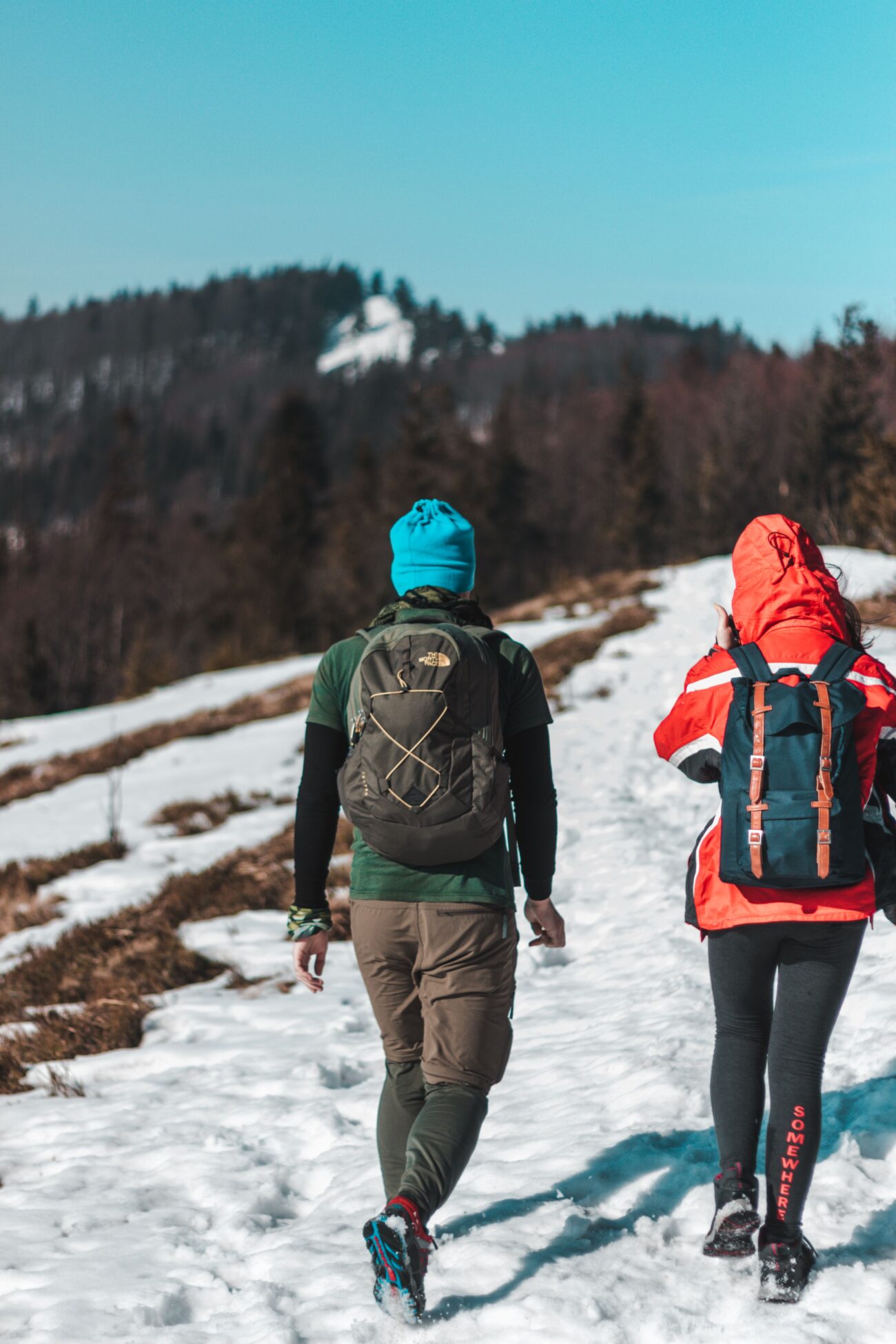
A frozen water filter doesn’t just stop working for the day. In most cases it’s permanently ruined, and you won’t find out until you’re back on trail trying to squeeze water through it and nothing comes out. Winter backpacking punishes gear in ways that summer trips never do, and three of the smallest items in your pack, your filter, your batteries, and your water itself, are also the most vulnerable to a hard freeze. The good news is that protecting all three comes down to a handful of habits you can build into your evening routine without adding a single gram to your base weight.
Why a Frozen Water Filter Is Usually a Dead Water Filter
Most ultralight filters, including the Sawyer Squeeze and similar hollow fiber designs, work by forcing water through a bundle of tiny tubes lined with microscopic pores. Those pores are what strain out bacteria and protozoa. The problem is that the water trapped inside those tubes expands when it freezes, and that expansion cracks the fibers from the inside. The filter can look completely fine from the outside and still be compromised, which is the scary part. You might keep using a filter that no longer filters anything, with no visible sign of the damage.
This is different from a filter that’s just clogged or slow. A clogged filter needs backflushing. A frozen one needs to be retired, full stop, unless you’ve tested it afterward (more on that below). That’s why prevention matters so much more here than with almost any other piece of winter gear.
How to Keep Your Water Filter From Freezing
Sleep with it
The single most reliable method is also the simplest: bring your filter into your sleeping bag or quilt at night. Most hikers tuck it into a sock or a small dry bag and keep it near their core, not down by their feet where it’s coldest. If your filter has any water left inside it when you stop for the night, blow it out through the output end first, both to protect it and to keep your sleep system dry.
Keep it off your pack exterior
- Store it inside your pack, close to your body-facing side, rather than clipped to the outside where wind chill hits it directly.
- Use an insulated pouch or neoprene sleeve during the day if you’re hiking in sustained sub-freezing temperatures, not just overnight.
- Avoid leaving it in a vestibule overnight, even in a sealed stuff sack. Vestibule temperatures track outside air temperature closely once the stove is off.
Time your water collection
Filter and treat your water earlier in the evening while temperatures are still manageable, rather than waiting until after dark when the real cold sets in. If you’re melting snow or breaking ice to access a source, do that filtering pass before camp chores wind down, then get the filter warm and dry for the night.
Test before you rely on it
If you suspect your filter froze despite your precautions, don’t just assume the worst or the best. Flush it, then do a simple flow test: a filter that’s lost integrity usually shows a sudden change in flow rate or, in more extreme cases, lets cloudy water through. When in doubt on a multi-day trip, backflush thoroughly and treat water chemically as a backup until you can confirm the filter at home.
Keeping Batteries and Electronics Warm
Lithium-ion batteries, the kind in your phone, headlamp, and power bank, lose usable capacity as temperatures drop. The chemical reactions that produce current simply slow down in the cold. This isn’t permanent damage the way a frozen filter is, but a power bank that reads as fully charged can still die far faster than expected, or fail to deliver enough current to charge a phone at all, once it’s genuinely cold.
- Keep your power bank and phone in an interior jacket pocket during the day, close to your body, rather than in an outer pack pocket.
- Bring electronics into your sleeping bag at night, the same way you would a water filter. A dry bag or stuff sack keeps condensation off them as they warm up.
- Charge things when they’re warm, not cold. Charging a near-frozen battery is harder on it than charging one that’s been warmed up first.
- Carry a little more battery capacity than you think you need in winter specifically, since cold-weather capacity loss is real even when you do everything right.
Water Bottles and Hydration Systems in Freezing Temps
Hydration bladders with hoses are notorious for freezing solid in cold weather, often at the mouthpiece first, which is exactly where you need flow. Many winter backpackers switch to simple wide-mouth bottles for this reason alone, since a bottle is far easier to insulate, thaw, and troubleshoot than a hose system.
The classic fix for bottles is the bottle-down method: store your water bottle upside down inside an insulated sleeve or sock. Ice forms at the surface of the water first, which means it forms at the cap end when the bottle is inverted, leaving the opening clear. At night, keep at least one bottle inside your sleeping bag, insulated and capped tightly, so you have liquid water first thing in the morning without needing to melt anything before coffee.
A Simple Cold-Weather Evening Routine
Most of this comes down to repeating the same few steps every night on a winter trip:
- Filter or treat the water you need for the evening and next morning before it gets fully dark and cold.
- Blow excess water out of your filter, then store it in your sleep system, not your pack or vestibule.
- Bring your phone, headlamp batteries, and power bank into your sleeping bag in a dry bag.
- Invert at least one water bottle and insulate it, ideally keeping one bottle inside your sleep system too.
- Do a quick flow check on your filter each morning if temperatures dropped well below freezing overnight.
Frequently Asked Questions
Can a frozen water filter be saved?
Sometimes, but you can’t assume it. If a filter has frozen while there was water inside it, the membrane may have cracked even if it still passes water. Backflush it thoroughly and run a flow and clarity test before trusting it exclusively, and treat water chemically as a backup until you’re confident.
Do I really need to sleep with my water filter every night?
Below freezing, yes, if there’s any water left inside it. A completely dry, empty filter is far more freeze-resistant than a wet one, so blowing it out before bed and keeping it warm covers both bases.
Why does my power bank seem to die faster in winter?
Cold temperatures temporarily reduce the usable capacity of lithium-ion cells. The stored energy is still mostly there, but the battery can’t deliver it as efficiently when cold, which is why keeping it warm against your body during the day makes a real difference.
What’s the easiest change for a beginner to make on a winter trip?
Switch from a hose-based hydration bladder to simple bottles. It removes the single most common freeze point on the trail and makes the bottle-down method easy to use without any extra gear.
Dialing in these small habits is really just another form of the ultralight mindset: thinking ahead so a tiny amount of effort at camp saves you from a much bigger problem down the trail. If you’re also trying to keep track of exactly what’s in your winter kit and how much it all weighs, it’s worth checking out FeatherPack, an iOS app where you photograph one piece of gear at a time and it automatically logs it with its weight into your gear closet, so you can build out a winter-specific pack list without digging through old receipts and manuals. For more on dialing in the rest of your cold-weather system, see our guides on vapor barrier liners, staying warm in a tent, and ultralight water filtration and treatment. What’s your go-to trick for keeping gear from freezing overnight? Drop it in the comments below.
