

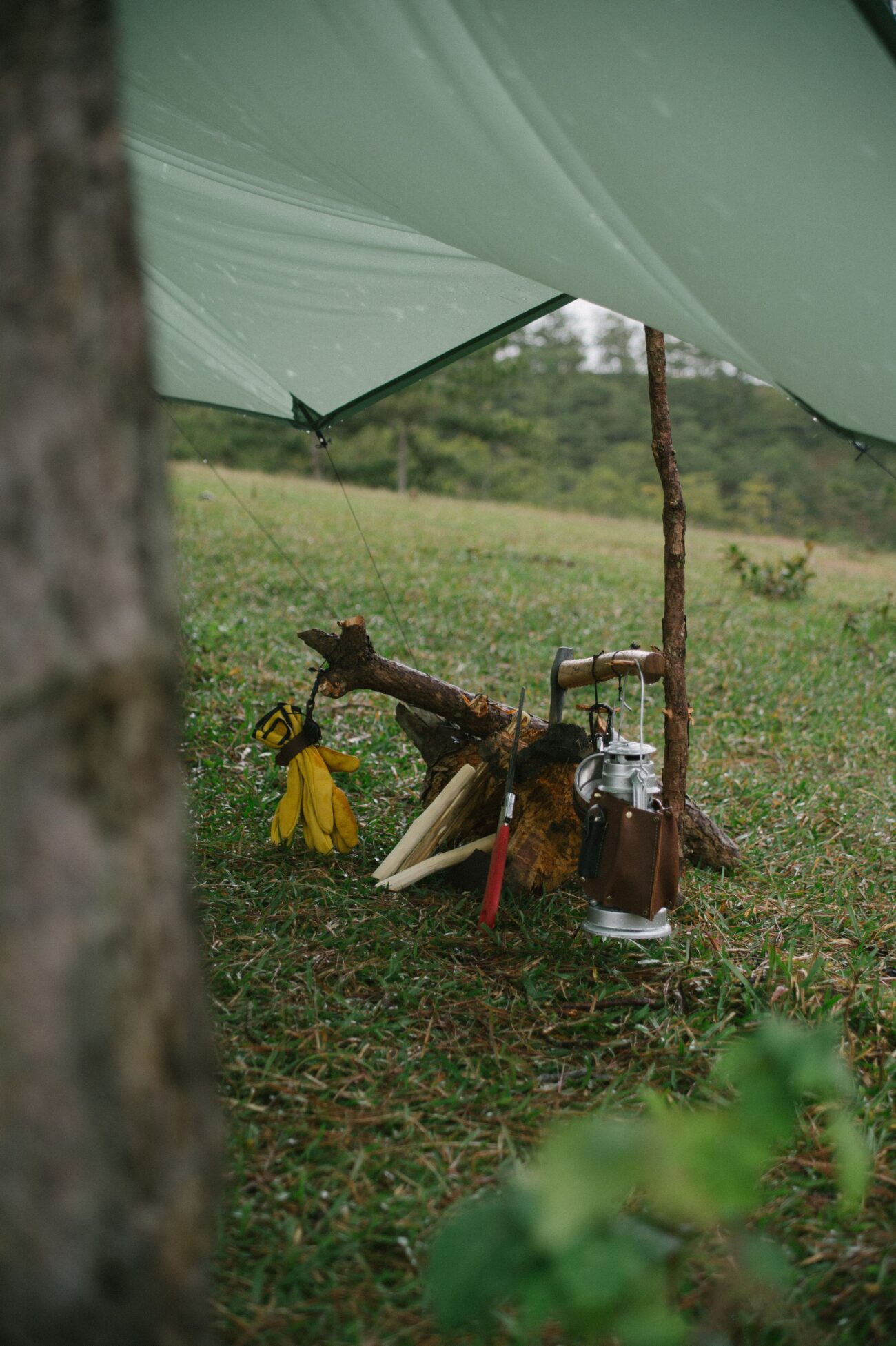
Pick a tarp that’s too small and you’ll spend half the night nudging your quilt back under cover every time the wind shifts. Pick one that’s too big and you’re hauling extra ounces (and extra cost in Dyneema per square foot) that never earns its keep. Tarp sizing is one of the few gear decisions in ultralight backpacking where the “just get the biggest one” instinct actually works against you, because every added square foot adds weight, pitching complexity, and price. This guide breaks down exactly what dimensions you need for solo and two-person trips, how weather changes the math, and what the most popular tarps on the market actually offer for their weight and price.
Why Tarp Size Is the Decision Most Hikers Get Wrong
Most new tarp campers size their shelter the way they’d size a tent: based on how many people need to lie down flat. That works for a floored, walled tent, but a tarp isn’t a box. It’s an angled plane, and the steeper you pitch it (which you should, in wind or rain), the more usable floor space you give up to the slope. A flat 8×10 ft tarp pitched low and steep for a storm can lose close to two feet of usable width on each side compared to a loose, high pitch in calm weather. If you size your tarp for fair-weather coverage only, you’ll find yourself short on dry ground exactly when you need it most.
The other mistake is treating tarp size as fixed once you own one. Hikers who do a mix of trip types, exposed alpine ridgelines versus sheltered forest camping, three-season versus shoulder-season, often end up wishing they’d bought one size up or down depending on the trip. If a tarp isn’t the right call for a given trip at all, it’s worth comparing against the alternatives first in our bivy vs. tarp vs. tent guide. Dialing in the right baseline size now saves you from either buying twice or compromising on every trip.
Solo Hiker Sizing
- 8×6 ft: The bare minimum for a solo hiker in mild, dry conditions. Covers your sleep system with little margin for gear storage or wind-driven rain.
- 8×8 ft: The realistic baseline most solo ultralight hikers land on. Enough coverage for a sleeping pad, quilt, and a dry spot for your pack under the edge.
- 9×9 ft: Worth the extra few ounces if you want genuinely comfortable coverage in all seasons, including room to sit up and cook under cover during a storm.
If you’re torn between 8×8 and 9×9, think about how often you camp above treeline or in exposed terrain where you can’t rely on trees to block wind-driven rain. The more exposed your typical trips, the more that extra foot of coverage pays for itself.
Two-Person Sizing
- 8×10 ft: The practical minimum for two adults sharing an A-frame or lean-to pitch. Tight in bad weather, fine in good weather.
- 9×10 or 9×11 ft: The better default for two taller hikers, or anyone who wants to store packs and boots under the tarp rather than in the vestibule-less open.
- 10×10 ft and up: Reserved for basecamp-style trips or couples who prioritize comfort over base weight. At this size you’re closer to a tent’s weight anyway, so it’s worth comparing against a true two-person shelter.
How Weather Changes the Math
Pitch angle is the variable most sizing guides skip, and it’s the one that actually determines whether you stay dry. A loose, high pitch in calm weather gives you nearly the full flat dimensions of the tarp in usable coverage. Pitch that same tarp low and steep to shed wind-driven rain, and you lose real floor space to the slope, often 18 to 24 inches off each side.
A rough sizing table by expected conditions:
- Light drizzle, calm: Solo 8×6 ft, two-person 8×9 ft
- Steady rain: Solo 8×8 ft, two-person 8×10 ft
- Heavy downpour: Solo 9×9 ft, two-person 9×11 ft
- Wind plus rain: Solo 9×9 ft, two-person 10×10 ft
The rule of thumb: if you’re buying one tarp for everything, size for the worst conditions you realistically camp in, not the average. A few extra ounces of fabric is a much smaller cost than a sleepless, soaked night. For the actual technique of getting a steep, storm-ready pitch without sacrificing all your coverage, our tarp pitching guide covers A-frame and pyramid setups in detail.
Popular Tarp Sizes, Weights, and Prices
Here’s how the sizing above translates into real products on the market right now, so you can see what you’re actually paying per square foot of coverage:
- Zpacks 8.5×10 ft Flat Tarp: 6.4 oz in .55 oz/sqyd Dyneema, around $399. One of the lightest options at this coverage size.
- Hyperlite Mountain Gear Flat Tarp: 8’6″x8’6″ or 8’x10′ options, 10.6 to 11.6 oz in Dyneema DCF, $390 to $420.
- Mountain Laurel Designs Grace Duo: roughly 9.5×7.5×9.5 ft, 5 to 11 oz depending on fabric choice between Dyneema DCF and Silpoly, around $180.
- SlingFin SplitWing UL Tarp: siliconized nylon, 7.9 oz, around $200, a solid mid-weight option if you’re not ready to commit to DCF pricing.
- Paria Sanctuary Sil Tarp: 10×8 ft in silicone/PU-coated nylon, about 10 oz, around $90. The budget entry point if you want to try tarp camping before investing in Dyneema.
Notice the spread: a Dyneema tarp at a given size can run two to four times the price of a silnylon or silpoly equivalent for a few ounces of weight savings. If you’re still deciding which fabric makes sense for your shelter, our silpoly vs. Dyneema comparison breaks down exactly when that premium is worth paying.
Matching Size to Fabric and Build
Size and fabric choice aren’t independent decisions. A bigger tarp in Dyneema stays reasonably light because the fabric itself is so low in weight per square yard, while the same dimensions in silnylon or silpoly start adding up fast once you’re past 9×9 ft. If you’ve settled on a larger tarp for two-person or storm-ready coverage, Dyneema is where the weight savings matter most. For a solo 8×8 ft tarp, the weight difference between fabrics is small enough that budget and durability preferences can reasonably drive the decision instead.
If you’re going the DIY route to hit an exact custom dimension rather than a stock size, our DIY tarp sewing guide walks through cutting and seaming your own tarp in either fabric, which is often the only way to land on a non-standard size like 8.5×9 ft without paying custom order fees.
Frequently Asked Questions
What’s the minimum tarp size for one person?
8×6 ft works in calm, dry conditions, but most solo hikers are better served by 8×8 ft as a baseline that handles a wider range of weather without feeling cramped.
Is a bigger tarp always better?
No. Beyond a certain point, extra square footage mostly adds weight and catches more wind, which makes storm pitches harder to secure. Size for your worst realistic conditions, not for maximum coverage.
Should I size differently for Dyneema versus silnylon?
Not by much. Size by coverage need first, then choose fabric based on budget and how much weight savings matters to you at that size. Dyneema’s weight advantage grows more noticeable as dimensions increase.
Can one tarp cover both solo and two-person trips?
A 9×9 ft or 9×10 ft tarp is a reasonable middle ground that works solo with generous storage and still fits two people in a tighter pitch, though it’s a compromise in both directions rather than ideal for either.
Final Thoughts
The right tarp size comes down to being honest about the worst weather you’ll actually camp in, not the best. Size for that, pick a fabric that matches your budget and weight goals, and you’ll end up with a shelter that works on the trips that matter instead of just the easy ones. If you’re also rethinking the rest of your shelter system while you’re at it, keeping track of what you own and what each piece weighs makes these upgrade decisions a lot easier. I use FeatherPack for that: you photograph one piece of gear at a time and it logs the weight into your inventory, so swapping a tarp or adding a bigger one shows up immediately in your base weight instead of as a guess. Have a tarp size or setup that’s worked well for you? Drop a comment below, it helps other readers dialing in their own shelter choice.
