
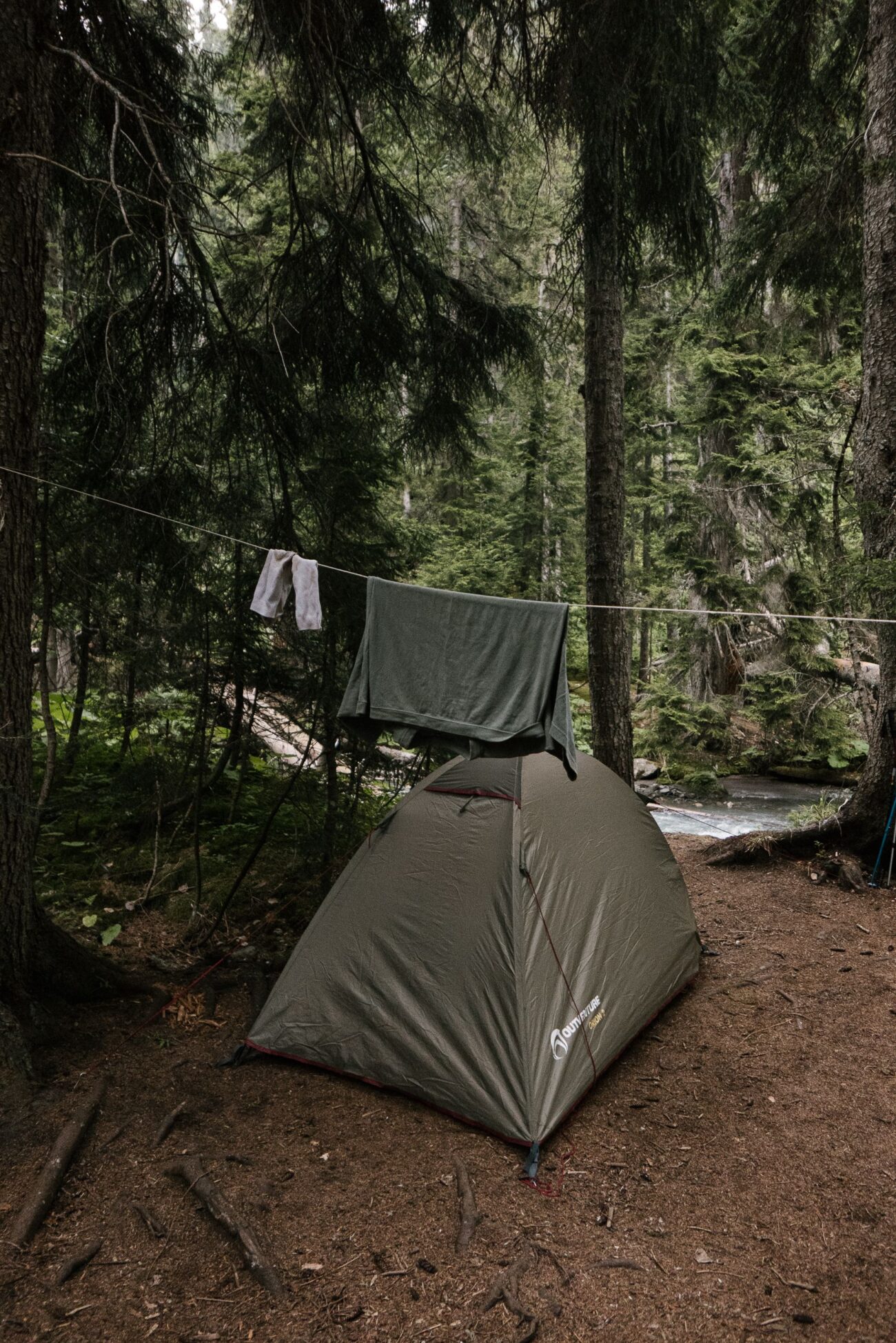
Every fall, the same question shows up in ultralight forums and gear closets alike: as nights get colder and wetter, is it time to swap the tarp for something with more coverage, or does a bivy sack get you 90 percent of a tent’s protection for a fraction of the weight? The honest answer is that tarps, bivies, and ultralight tents are not competing for the same job. Each one solves a different problem, and picking the wrong one for a shoulder-season trip is how hikers end up either soaked through a mesh-heavy tent or shivering inside a bivy that turned into a personal rain barrel. Here is how to actually decide.

What Actually Separates a Tarp, a Bivy, and an Ultralight Tent
The three systems sit on a spectrum from “just a roof” to “a fully enclosed room,” and weight tracks almost exactly with how much of the elements they block.
- Tarp: A flat or shaped sheet of silnylon, sil-poly, or Dyneema Composite Fabric (DCF) pitched with trekking poles and guylines. No floor, no walls, typically 150 to 400 grams depending on size and material.
- Bivy sack: A body-length sleeve, usually waterproof-breathable fabric on top and a more durable floor fabric on the bottom, that wraps directly around your sleeping bag or quilt. Weights range from around 150 grams for a simple wind and bug shell up to 400+ grams for a fully waterproof model with a hooped head end.
- Ultralight tent: A trekking-pole or dedicated-pole shelter with a full floor and either partial or full mesh walls, often paired with a separate waterproof fly. Modern single-wall DCF shelters and double-wall trekking-pole tents now land anywhere from 500 grams to just over a kilogram for a solo setup.
The gap between a tarp and a bivy is really about bug and wind protection at the edges. The gap between a bivy and a tent is about livable space, condensation management, and how much of your trip happens sitting up inside the shelter waiting out weather.
The Case for Going Tarp: Weight, Airflow, and Storm Versatility
A well-pitched tarp is still the lightest fully practical shelter option that exists, and it is the one piece of gear where the weight savings over a tent are almost never marginal. Dropping from a one-pound tent to a six-ounce tarp is a real, felt difference on a long carry day. Tarps also win on ventilation: with no floor and no fully sealed walls, condensation, which is the single biggest complaint about single-wall shelters, is rarely an issue because moist air simply escapes instead of collecting on the underside of the fabric.
The tradeoff is skill and exposure. A tarp does nothing to keep out bugs or blowing precipitation unless it is pitched low and tight, and in a real storm it demands technique that a tent pitch does not. For readers who want the actual pitching mechanics, the site’s tarp pitching guide covering A-frame and pyramid setups walks through how to get a genuinely storm-worthy pitch out of a simple rectangle of fabric, and the comparison of Dyneema versus silnylon after repeated wet trips is worth reading before choosing which fabric to buy, since the two materials behave very differently once they are soaked and packed away wet.
The Case for a Bivy Sack: When Minimal Coverage Makes Sense
A bivy earns its place in one specific scenario: you want bug and wind protection without the packed size or setup time of a tent, and you are either pairing it under a tarp for storm backup, or you are confident enough in the forecast that you do not need a fully sealed shelter. Solo fastpackers and alpine climbers who move fast and sleep in short blocks lean on bivies for exactly this reason. A minimalist bivy also has no poles to break and almost no footprint requirement, which matters above treeline or on rocky ledges where a tent’s stake-out area simply is not available.
Where Bivies Struggle: Condensation and Claustrophobia
The honest downside of a bivy is that a waterproof-breathable membrane wrapped a few inches from your face and sleeping bag traps far more moisture than a tarp does, and in humid or rainy conditions that moisture ends up on the inside of your quilt by morning. Some hikers also find the tight headspace genuinely hard to tolerate on a multi-night trip, especially if a storm keeps them zipped in longer than expected. A bivy is not really a stand-alone weatherproof shelter for extended bad weather; it is best thought of as backup coverage under a tarp, or as a minimalist option for short trips with a confident forecast.
The Case for an Ultralight Tent: Full Protection Without the Old Weight Penalty
The biggest shift in the shelter category over the past several years is that “full tent” no longer means a weight penalty the way it once did. DCF and hybrid trekking-pole tents now sit close enough to tarp weights that many hikers who used to run tarps year round have switched back to a tent for anything beyond three-season fair weather. A tent gives you a sealed floor, a place to sit up and cook in a vestibule during a storm, and dramatically better bug protection than either a tarp or a bivy alone. For a full rundown of current models sorted by conditions, the site’s guide to the best ultralight tents for windy and rainy environments is a good next stop, and pairing whichever shelter you choose with the right sleeping pad matters more than people expect once temperatures drop, which the site’s R-value guide to sleeping pads for cold nights covers in more detail.
Matching Shelter to Season and Trip Type
Rather than picking one shelter forever, most experienced ultralight hikers rotate between two systems depending on the season and the trip:
- Dry summer trips below treeline with a settled forecast: tarp alone, or tarp with a minimalist bug bivy if mosquitoes are heavy.
- Fast, short alpine missions or fastpacking: bivy alone or bivy under a small tarp for backup.
- Shoulder season, exposed ridgelines, or unpredictable weather: a full tent, ideally a double-wall or hybrid design that manages condensation well in cold, humid air.
- Winter or extended storm exposure: a four-season or reinforced three-season tent, since neither a tarp nor a bivy alone can reliably shed wind-driven snow.
If you only own one shelter and want it to cover the widest range of conditions, a well-designed single-wall or hybrid tent is usually the more defensible choice today than it was five years ago, simply because the weight difference over a tarp has shrunk so much.
Combining Systems: The Tarp and Bivy Hybrid
A lot of long-distance hikers land on a middle path: a tarp for the roof, paired with a lightweight bivy underneath for a sealed floor, bug protection, and a bit of splash-back defense when wind drives rain sideways under the tarp’s edges. This combination usually lands lighter than a full tent while fixing most of a bare tarp’s weaknesses, at the cost of carrying and pitching two pieces of gear instead of one. It is worth weighing against your total pack setup rather than in isolation, since two shelter items also means two things to dry out and pack away each morning.
Frequently Asked Questions
Is a bivy sack warmer than a tent?
Not meaningfully. A bivy’s close fit can trap a small amount of extra warmth around your sleeping bag, but the difference is usually a couple of degrees at most, and it comes at the cost of significantly worse moisture management. Insulation and ground insulation do far more for warmth than shelter choice.
Can you use a tarp without a bivy in bug season?
You can, but expect a rough night. A bare tarp has no barrier against mosquitoes or ticks, so most hikers either add a simple bug bivy, use a headnet and tight clothing, or switch to a mesh-walled tent for the buggiest stretches of the season.
Which is best for a beginner: tarp, bivy, or tent?
A tent, without much debate. Tarps and bivies both reward experience with pitching technique and weather judgment that most new backpackers have not built yet, and a bad first night in a poorly pitched tarp is a common reason people give up on ultralight gear entirely.
How much weight do you actually save going from a tent to a tarp?
It depends heavily on the specific models being compared, but a realistic range for a solo setup is somewhere between 150 and 500 grams, with the gap shrinking every year as ultralight tent designs improve.
Final Thoughts
There is no single correct shelter system, only the right one for the trip in front of you. If you are still working out where each of these pieces fits into your overall kit, this is exactly the kind of decision that gets easier once you can see your gear as a system instead of a pile of individual items. That is the whole idea behind FeatherPack, an app where you photograph your gear once, let it log the weight automatically into your inventory, and then build trip-specific packs from that inventory so you can see in seconds how swapping a tent for a tarp and bivy actually moves your base weight. What shelter system are you running into this fall? Drop a comment below, especially if you have found a tarp and bivy combo or a specific tent that handles shoulder-season weather well.
