

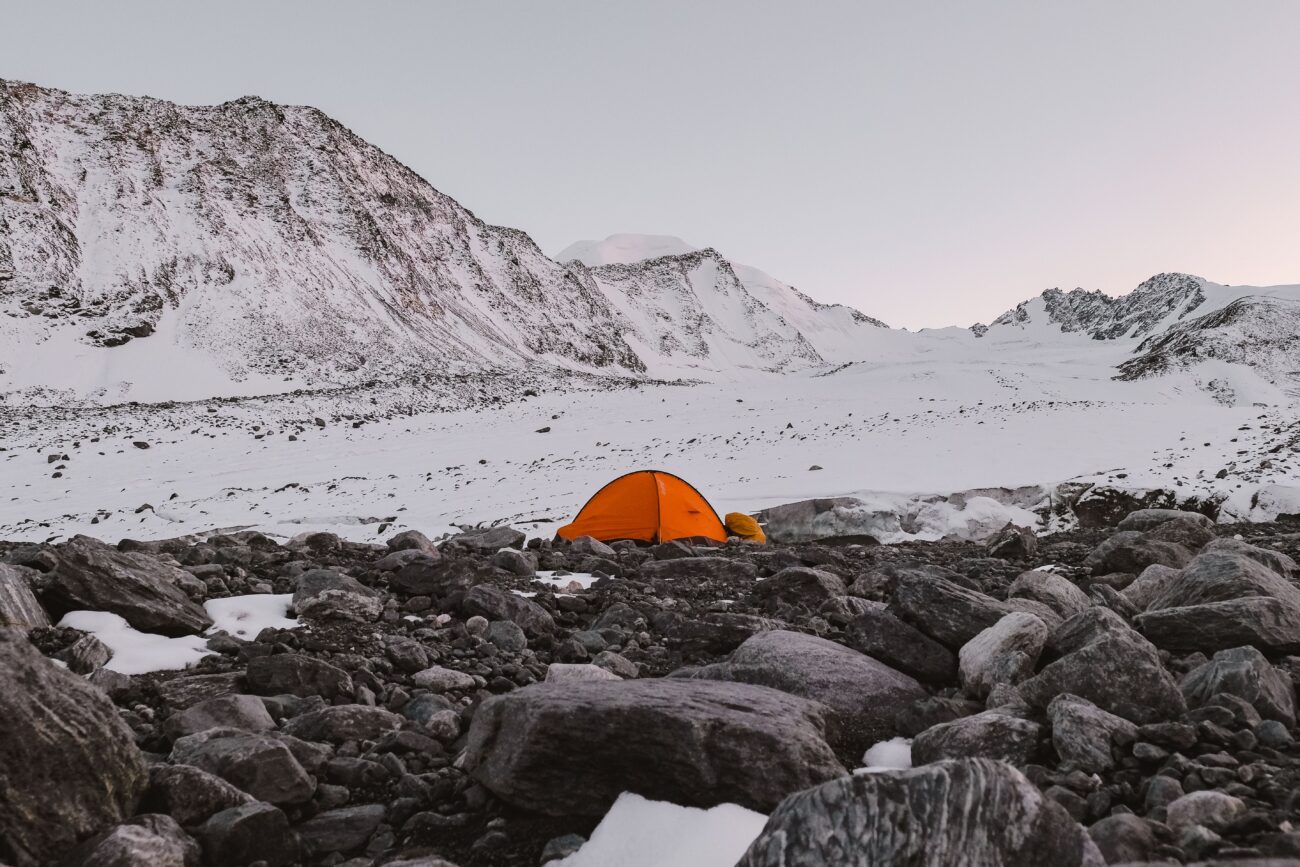
Scroll through any ultralight backpacking forum long enough and you will see the same tent recommended over and over, usually within the first few replies of any “what shelter should I buy” thread. The Durston X-Mid has become the default answer for hikers looking to drop weight without draining their bank account, and that kind of consensus is rare in an industry where everyone seems to have a different favorite. The question worth asking is whether that reputation is earned by the design itself, or whether it is just the product of a very good marketing narrative and a very active online community. After digging into the specs, the pitch mechanics, and how the fabric choices actually hold up, the short answer is that the hype is mostly justified, with a few caveats worth knowing before you buy.
What Is the Durston X-Mid, Exactly?
The X-Mid line is a family of trekking-pole tents built around an asymmetric pyramid design, and it now spans several versions: the original silpoly X-Mid 1 and X-Mid 2, and the ultralight X-Mid Pro 1 and Pro 2 built from Dyneema Composite Fabric. The standard X-Mid 2 runs about $319 and comes in around 31.3 ounces of trail weight, while the X-Mid 1 sits at roughly $269 for about 26.2 ounces. On the premium end, the X-Mid Pro 2 costs around $679 and drops to 17.9 ounces with a Dyneema floor (19.9 ounces with silnylon), and the X-Mid Pro 1 runs about $599 at 15.5 ounces with the Dyneema floor option.
What sets the X-Mid apart from a typical single-wall pyramid or a symmetric double-wall tent is the offset pole placement and the way the fly and inner tent interact. Instead of a center pole or two poles set symmetrically at each end, the X-Mid uses two trekking poles positioned off to the sides, which frees up interior headroom and lets the door openings sit in a much more usable spot relative to the vestibules.
Setup: Why the Asymmetric Pitch Matters
Most single-wall ultralight shelters trade convenience for weight savings, and pitching them well takes practice. The X-Mid’s catenary-cut panels and pre-set guyline points are designed to make a taut pitch achievable almost by accident. You stake out the four corners, insert your trekking poles at the marked points, and tension the remaining guylines. The catenary cut does most of the work of preventing sag, which matters a lot in a fabric like silpoly or Dyneema that can flap loudly and lose structural integrity if it is pitched loose.
The layout also solves a common complaint with pyramid-style shelters: cramped vestibules that force you to crawl over your gear to get in or out. Because the doors are offset rather than centered, each vestibule has a large, independently usable entry and storage area, which is a meaningful quality-of-life upgrade on multi-day trips where you are getting in and out of the tent in the rain more than once a day.
Common Pitching Mistakes
- Understaking the corners: the whole structure relies on the four corner stakes being pulled taut first, before you even insert the trekking poles.
- Skipping the mid-panel guylines: these are what keep the fly from sagging into the inner tent during a long rain, and skipping them is the most common reason people report condensation touching their bag.
- Using the wrong pole length: the X-Mid is tuned for a specific pole height range, and setting your poles too short or too long throws off the whole geometry.
Weather Performance: Wind and Rain
This is where the X-Mid’s reputation gets tested the most, and it largely holds up. The low-profile pyramid shape sheds wind well from most angles, and the dual-vestibule design means you can orient the tent so the narrower end faces the prevailing wind on an exposed ridge or alpine bench. That said, the trekking-pole design does mean the structure is only as rigid as your poles and your stake-out job, so in genuinely severe alpine wind you are still better served by a fully freestanding, pole-supported tent.
In rain, the story is more clearly in the X-Mid’s favor. The standard version’s silpoly fly resists the sag and stretch that plagues silnylon shelters when they get wet, which means less midnight re-tensioning. The Dyneema-faced X-Mid Pro versions take this a step further since Dyneema fabric itself does not absorb water or stretch at all, so a taut pitch at dusk stays taut through an overnight storm. If you want the deeper technical breakdown of why that matters, our Silpoly vs. Dyneema shelter fabric comparison covers the sag-in-wet-weather difference in more detail, and our piece on why ultralight hikers are obsessed with Dyneema fabric explains the underlying material science.
Weight Breakdown: X-Mid vs. X-Mid Pro
The weight difference between the standard and Pro lines is significant enough that it should drive your buying decision more than anything else on this list. Here is how the numbers actually stack up:
- X-Mid 1 (silpoly): about $269, roughly 26.2 oz trail weight, 93 x 33 in floor.
- X-Mid 2 (silpoly): about $319, roughly 31.3 oz trail weight, 92 x 52 in floor.
- X-Mid Pro 1 (Dyneema): about $599, roughly 15.5 oz trail weight with a Dyneema floor, 90 x 32 in floor.
- X-Mid Pro 2 (Dyneema): about $679, roughly 17.9 oz trail weight with a Dyneema floor, 90 x 46 in floor.
In practical terms, moving from the X-Mid 2 to the X-Mid Pro 2 saves you about 13 ounces for an extra $360. Whether that trade is worth it depends heavily on how many nights a year you actually spend in the tent. A weekend warrior chasing marginal gains will likely never recoup that cost in enjoyment, while someone logging a thousand-plus trail miles a year will feel every ounce differently. If you want a fuller framework for deciding when the Dyneema premium pays off, our guide to the best ultralight tents under $300 lays out the budget-tier logic, and it happens to feature the standard X-Mid as one of its top picks.
Pros and Cons
- Pro: Genuinely easy pitch for a trekking-pole shelter, even for hikers who have struggled with pyramid tents before.
- Pro: Excellent interior-to-weight ratio, especially in the 2-person version, where the offset doors add real livable space.
- Pro: Strong value at every price tier, from the budget silpoly version up through the Dyneema Pro line.
- Con: Not freestanding, so pitching on solid rock, sand, or snow without proper anchors takes extra effort and gear.
- Con: Single-wall condensation is still a factor on humid, still nights, as it is with virtually every non-double-wall ultralight shelter.
- Con: Long lead times have historically been an issue for Durston, since demand frequently outpaces production, so ordering ahead of a trip matters.
Is It Worth the Price? X-Mid vs. Dyneema Alternatives
Compared to other Dyneema shelters on the market, the X-Mid Pro line is priced competitively rather than at the very top. It is not the lightest single-wall pyramid you can buy, and it is not the cheapest Dyneema option either, but it sits in a sweet spot of livability, weather resistance, and price that few competitors match feature-for-feature. If you have not settled on a shelter style yet, it is worth stepping back and comparing pyramid tents against other configurations entirely. Our bivy vs. tarp vs. tent shelter guide is a good starting point if you are still deciding what category of shelter fits your trip style before you commit to a specific model.
For most three-season backpackers, the standard silpoly X-Mid delivers about ninety percent of the weather performance of the Pro version at less than half the price, which is exactly why it shows up in so many recommendation threads. The Pro line earns its premium primarily for hikers counting grams on long thru-hikes, where the cumulative weight savings across months on trail genuinely changes how your body feels by the end.
Frequently Asked Questions
Is the Durston X-Mid freestanding?
No. It relies on trekking poles and a taut stake-out at all four corners plus the mid-panel guylines. You can pitch it without trekking poles using dedicated tent poles sold separately, but it will never be freestanding in the way a traditional dome tent is.
How does the X-Mid 2 compare to the X-Mid Pro 2 in real-world use?
The interior dimensions and livability are nearly identical between the two. The main differences are weight, cost, and how the fabric behaves in sustained wet weather, with the Dyneema Pro version holding its taut pitch better over a multi-day storm.
Does the X-Mid have condensation problems?
Some, as with any single-wall shelter, particularly in still, humid conditions or when the vents are not adjusted properly. Good site selection and keeping the doors slightly open for airflow when weather allows will minimize it substantially.
Is one person or two people the better size for solo hikers?
The X-Mid 1 is genuinely tight for anyone who wants to store gear inside with them, and many solo hikers who value comfort over the last few ounces end up preferring the X-Mid 2 despite carrying a bit more weight.
The Durston X-Mid earns its reputation less through hype and more through consistently good design decisions stacked on top of each other. If you pick one up, keeping track of exactly how much it weighs alongside the rest of your kit is worth doing properly rather than guessing. I photograph one piece of gear at a time in FeatherPack and let it log the weight automatically, which makes it easy to see exactly how much a shelter swap like this one actually changes your base weight instead of estimating and hoping. Have you pitched an X-Mid in genuinely bad weather, or are you still deciding between the standard and Pro versions? Drop a comment below with what you are running.
