

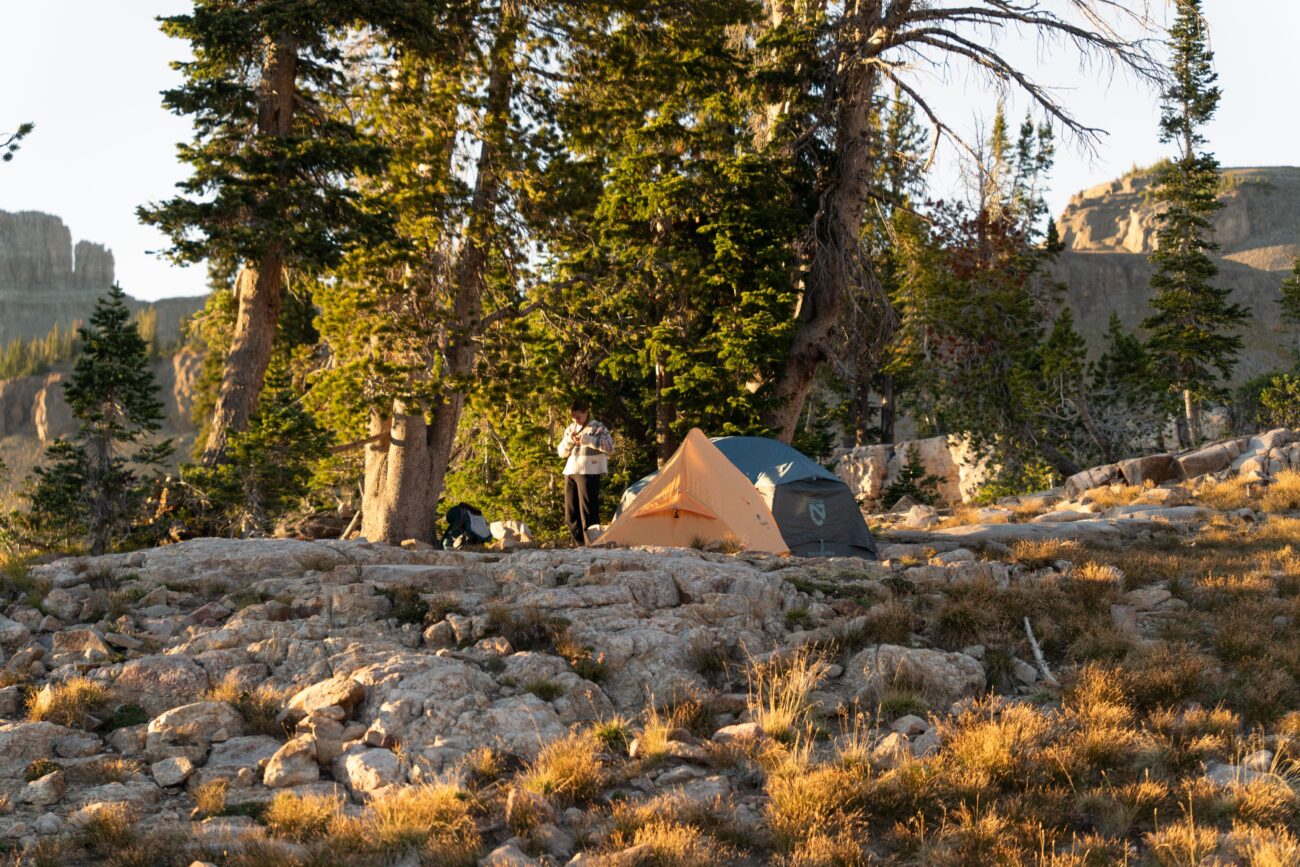
A two-person Dyneema shelter can cost more than a complete budget backpacking kit: pack, bag, and tent combined. That price gap is the single most common hesitation hikers run into when they start shopping for an ultralight shelter, and it’s a fair one to have. Before you spend 500 extra dollars on a few hundred grams of weight savings, it’s worth doing the actual math instead of just trusting the hype.
The Real Price Gap: Dyneema vs. Budget Tents in 2026
The numbers are stark when you line them up side by side. A Zpacks Duplex, the benchmark two-person Dyneema Composite Fabric (DCF) shelter, currently runs around $749 and weighs roughly 504 to 566 grams depending on color and floor option. The Durston X-Mid Pro 2, built with a DCF canopy and floor, sits close behind at about $679 for a trail weight near 509 grams.
On the budget side, a Naturehike CloudUp 2 costs around $169 and weighs close to 1.6 kilograms. The Six Moon Designs Skyscape Scout comes in near $160 at about 1.1 kilograms, and freestanding budget options like the Kelty Late Start 2 land in the same price range at closer to 2.3 kilograms. Even the mid-tier Durston X-Mid in silpoly, which splits the difference between budget and full DCF, typically lands in the $200 to $280 range. For a closer look at how a budget pick like Naturehike stacks up against a mid-tier Durston shelter, see the Naturehike vs. Durston comparison.
Do the division and the “5x” framing holds up almost exactly: $749 versus roughly $160 is more than a 4.5x multiplier, and that’s before stakes, a footprint, or seam sealing are factored in.
What You Actually Get for the Extra Money
Weight savings
The weight difference between a Dyneema shelter and a budget tent usually lands somewhere between 600 grams and 1.1 kilograms, roughly 1.3 to 2.4 pounds. That’s a meaningful chunk of base weight on its own, especially for hikers chasing a sub-10-pound setup, but it’s worth remembering that shelter weight is only one line item in a full gear list.
Packed size
Dyneema doesn’t compress as small as some silnylon or polyester fabrics do, but the lower overall fabric weight still usually means a smaller packed volume than a budget tent built from heavier, bulkier material. For frameless packs with limited internal volume, that difference can matter as much as the weight itself.
Water resistance over time
Dyneema fiber itself doesn’t absorb water the way nylon does, so a DCF tent won’t soak up moisture and get heavier in a multi-day rainstorm the way a budget nylon or polyester tent can. It also won’t sag and need re-tensioning overnight, since the fiber has almost no stretch under load. Budget tents, especially ones built from standard polyester, are more prone to both problems.
Durability and lifespan
This is the most argued-about category, and the honest answer is “it depends.” Dyneema resists UV degradation and abrasion extremely well along the fiber lines, but the laminate itself can delaminate over years of heavy UV exposure and the fabric is notoriously bad at resisting puncture from a sharp rock or a dog’s claws, since there’s no tear-stop weave to catch a hole once it starts. Budget tents with a tighter denier weave can sometimes outlast a Dyneema shelter in rocky, high-abrasion terrain, even though they weigh more.
The Cost-Per-Gram-Saved Math
This is the calculation that actually settles the argument for most people. Take the price difference, roughly $580 between a Zpacks Duplex and a Naturehike CloudUp 2, and divide it by the weight saved, about 1.1 kilograms. That works out to a little over $500 per kilogram saved, or close to $230 per pound.
Compare that to other common base-weight cuts: switching from a 3-pound synthetic bag to a 1.5-pound down quilt often costs $150 to $250 per pound saved. Trimming a pack from 3 pounds to 1.5 pounds can land in a similar range. A Dyneema tent upgrade is expensive, but it isn’t wildly out of line with what ultralight hikers already pay elsewhere in a gear list, a question covered in more general terms in The Dyneema Dilemma. It’s simply a bigger single purchase, which makes the sticker shock more obvious.
When a Budget Tent Is the Smarter Buy
- You hike fewer than 10 to 15 nights a year. At low usage, the cost-per-night math rarely favors the $600+ shelter, and a budget tent will likely outlast your interest in logging that many trips before it needs replacing.
- You’re still dialing in your kit. Base weight philosophy, pitch style, and interior space preferences change a lot in a hiker’s first few seasons. Spending $150 to learn what you actually want is smarter than committing $700 before you know your preferences.
- You frequently camp in abrasive terrain. Scree fields, exposed granite, and heavy brush are harder on DCF than on a tighter-weave nylon or polyester fabric.
- Budget genuinely matters more than grams right now. There’s no shame in this. A $160 tent that gets used is infinitely better than a $700 tent sitting on a wishlist.
When Dyneema Earns Its Price Tag
- You’re thru-hiking or logging 30+ nights a year. The cost per use drops fast, and the cumulative weight savings on a 2,000-mile trail compound every single day.
- You’ve already cut the easy weight. If your pack, quilt, and clothing are already optimized, the shelter becomes one of the last big single-item cuts available.
- You consistently hike in wet climates. Not soaking up water and not sagging overnight in sustained rain is a real, repeatable advantage, not just a marketing point.
- Resale value matters to you. Dyneema shelters from brands like Zpacks and Durston hold value well on the used market, which softens the effective cost over a multi-year ownership period.
For a deeper look at how the top Dyneema shelters compare to each other, the Durston X-Mid Review breaks down pitch, weather performance, and real weight numbers for one of the most talked-about options on the market. If you’re not sold on Dyneema at all, the Best Ultralight Tents Under $300 guide covers seven solid budget shelters and what you give up compared to a DCF build.
Frequently Asked Questions
Is a Dyneema tent actually worth 5x the price of a budget tent?
For hikers logging 20 or more nights a year, yes, the cost per use and the cumulative weight savings generally justify it. For occasional weekend campers, a budget tent usually delivers more value per dollar.
Do Dyneema tents last longer than budget tents?
Not automatically. Dyneema resists UV and water absorption extremely well, but it’s more vulnerable to puncture and tear propagation than a tightly woven nylon fabric. Lifespan depends heavily on terrain and how carefully the tent is handled.
What’s the cheapest way to try a Dyneema shelter without the full price tag?
A Dyneema tarp or a hybrid shelter with a DCF canopy and silnylon or mesh floor can cut the price significantly while still giving a feel for how the fabric performs in rain and wind.
Is the weight difference between Dyneema and budget tents really noticeable on the trail?
A 600 gram to 1.1 kilogram difference is noticeable in your pack and over a long day’s climb, but it’s a smaller gain than switching from a heavy framed pack to a frameless one, or from a synthetic bag to a quilt. Treat it as one piece of a larger base weight strategy, not a silver bullet.
Final Thoughts
The honest takeaway is that neither option is objectively “better.” A Dyneema tent is a tool for hikers who already know their kit and use it enough to justify the premium. A budget tent is the smarter default for most people starting out, and there’s no reason to feel behind for choosing one.
Whichever shelter you land on, the real lever for cutting pack weight isn’t any single item, it’s knowing exactly what everything in your pack weighs and why it’s there. That’s the gap FeatherPack was built to close: photograph one piece of gear at a time, and the app recognizes it and logs the weight straight into your gear closet, so you can build out trip-specific packs and watch your real base weight add up before you ever leave the driveway. If you’ve been putting off a Dyneema upgrade because you’re not sure how much it would actually save, that’s exactly the kind of question a weight-tracked gear closet answers in seconds.
Have you made the jump to Dyneema, or are you sticking with a budget shelter for now? Drop your reasoning in the comments, it helps other hikers weighing the same decision.
